Justin Chelette
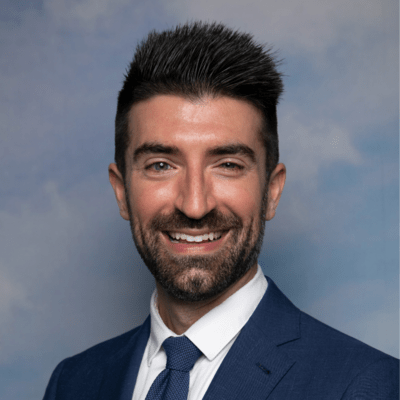
Justin Chelette, OD, FAAO
Justin Chelette, the founder of Texas Vision Therapy, was inspired by vision therapy after suffering from strabismus as a child. Seeing the difference vision therapy had in his own life, Dr. Chelette became passionate about helping others overcome their vision issues. Dr. Chelette attended the University of Texas at Austin, where he graduated with degrees in biology and French in 2013. He earned his doctorate in optometry at Nova Southeastern University in Florida, graduating with the highest honors in 2017. After graduation, he went on to complete an accredited residency in vision therapy and rehabilitation through the Rosenberg School of Optometry in San Antonio. Prior to returning to Houston, he worked as an assistant professor at the Kentucky College of Optometry where he had several roles: he taught the "neuro-ophthalmic disease and acquired brain injury" course to third year students, worked in labs teaching students how to perform optometric examinations, and he was contracted to Pikeville Medical Center, the largest hospital in southeastern Kentucky, where he was their chief pediatric optometrist. Once back in Houston, Dr Chelette also became an adjunct faculty member at the University of Houston College of Optometry. In his spare time, Dr. Chelette enjoys trying new foods from different cultures, listening to music (particularly Spanish music), and traveling.
2026-04-17
- BEHAVIORAL THERAPEUTIC METHODS
- Plennary Hall
- BEHAVIORAL THERAPEUTIC METHODS
- Plennary Hall
- BEHAVIORAL THERAPEUTIC METHODS
- Plennary Hall
2026-04-18
- BEHAVIORAL THERAPEUTIC METHODS
- Workshop B
Accommodation dysfunction is a common source of patient symptoms that is becoming more common in our increasingly digital societies. This 90-minute workshop provides a clinical framework for...
Accommodation dysfunction is a common source of patient symptoms that is becoming more common in our increasingly digital societies. This 90-minute workshop provides a clinical framework for understanding, evaluating, and treating accommodative dysfunction, focusing particular emphasis on the neurological basis of accommodation.
The workshop challenges the prevailing view of accommodation as a purely ocular mechanical event. Drawing on current understanding of cortical and subcortical visual control, attendees will learn how frontal lobe top-down regulation, cerebellar facility calibration, and autonomic balance all contribute to, or undermine, efficient accommodative function. This neurological framing has direct implications for why vision therapy works and how to communicate its mechanism to patients and referrers.
Upon completing this workshop, attendees will be able to:
- Select and interpret a comprehensive accommodative test battery, including nearpoint retinoscopy; accommodative amplitudes; monocular and binocular accommodative facility; then phorometric testing of fused / unfused cross cylinder and NRA/PRA.
- Differentiate primary accommodative dysfunction from vergence-driven accommodative disruption using monocular versus binocular test findings.
- Develop a structured treatment progression using evidence-based therapeutic activities
- Recognize the clinical populations most vulnerable to neurologically mediated accommodative dysfunction, including post-concussion patients, children with attention difficulties, and those with learning-related vision problems.
This workshop combines didactic content with live activity demonstration and attendee participation, making it immediately applicable to clinical practice.
- BEHAVIORAL THERAPEUTIC METHODS
- Workshop B
Accommodation dysfunction is a common source of patient symptoms that is becoming more common in our increasingly digital societies. This 90-minute workshop provides a clinical framework for...
Accommodation dysfunction is a common source of patient symptoms that is becoming more common in our increasingly digital societies. This 90-minute workshop provides a clinical framework for understanding, evaluating, and treating accommodative dysfunction, focusing particular emphasis on the neurological basis of accommodation.
The workshop challenges the prevailing view of accommodation as a purely ocular mechanical event. Drawing on current understanding of cortical and subcortical visual control, attendees will learn how frontal lobe top-down regulation, cerebellar facility calibration, and autonomic balance all contribute to, or undermine, efficient accommodative function. This neurological framing has direct implications for why vision therapy works and how to communicate its mechanism to patients and referrers.
Upon completing this workshop, attendees will be able to:
- Select and interpret a comprehensive accommodative test battery, including nearpoint retinoscopy; accommodative amplitudes; monocular and binocular accommodative facility; then phorometric testing of fused / unfused cross cylinder and NRA/PRA.
- Differentiate primary accommodative dysfunction from vergence-driven accommodative disruption using monocular versus binocular test findings.
- Develop a structured treatment progression using evidence-based therapeutic activities
- Recognize the clinical populations most vulnerable to neurologically mediated accommodative dysfunction, including post-concussion patients, children with attention difficulties, and those with learning-related vision problems.
This workshop combines didactic content with live activity demonstration and attendee participation, making it immediately applicable to clinical practice.

