Dorota H. Szczęsna-Iskander
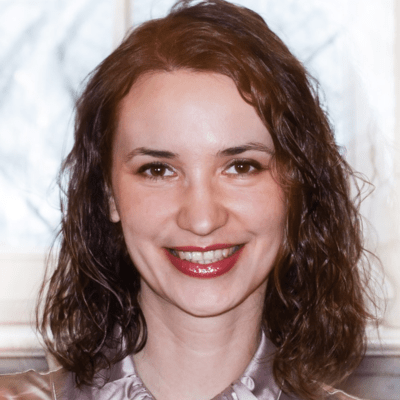
Dorota H. Szczęsna-Iskander is an Associate Professor at the Department of Optics and Photonics, Wroclaw University of Science and Technology. For many years she has been involved in the development of methods for non-invasive measurement and objective evaluation of the tear film dynamics in order to support the dry eye syndrome diagnosis, the biocompatibility of contact lens material with the tear film estimation and the effectiveness of lubricating drops evaluation. Her papers are published mainly in ophthalmology, optometry and biomedical optics journals. Dr Szczęsna-Iskander was involved in research projects carried out at Sahlgrenska University Hospital, Sweden, and School of Optometry and Vision Optics, Queensland University of Technology, Australia and most recently the international project within the European Dry Eye Network (EDEN). The results of her research has been recognized and awarded at international conferences, both ophthalmological (EVER, ARVO, ECLSO) and optometric (BCLA) and by the Minister of Science and Higher Education with a fellowship for outstanding young scientists. She has given guest seminars at higher education institutions in Australia, Ireland and USA and presentations at various domestic and international conferences.
Current employment:
Wrocław University of Science and Technology
Organizational membership:
ARVO (The Association for Research in Vision and Ophthalmology)
2026-04-18
- PRESBIOPIA
- Plennary Hall
PRESBYOPIA-MANAGEMMENT - STARCZOWZROCZNOŚĆ!The number one reason for visiting the optometrist – is near vision problems. At the same time, this topic does not get the attention it deserves a...
PRESBYOPIA-MANAGEMMENT - STARCZOWZROCZNOŚĆ!
The number one reason for visiting the optometrist – is near vision problems. At the same time, this topic does not get the attention it deserves at clinical conferences and in the optometric literature within our field. Myopia-management gets all the attention, while presbyopia maybe has much more potential in our field. Optometria 2026 in Kraków is an exception to that rule, and ís taking presbyopia-management seriously. The key word here is ‘management’ as we should – like in myopia management – focus on and consider áll options to satisfy the patient – that could include (but is not limited to) contact lenses: surgical interventions and even pharmaceutical are possibilities too, apart from glasses. The problem often is that in English literature for instance, there is no good word for ‘presbyopia’ in the general public to discuss this. Therefore, patients come in saying they ‘need reading glasses’. This is channeling a need (a near vision demand) towards a product. In presbyopia management we should turn this around and meticulously analyze and define the near vision demand the patient is desiring and thén talk about suitable options. Including contact lenses, which can offer some great advantages over other options. It all starts with good communication, and what really helps is that in Polish you seem to have a term called ‘starczowzroczność’, that other languages lack. This is a very nice – neutral – starting point to start the presbyopia journey, to discuss the clinical consequences and to come to best possible solution.
1. Changes in refraction and binocular vision in presbyopic patients - Susan Gromacki (20min)
This presentation will discuss the impact of presbyopia on the ocular system; in particular, on accommodation, distance and near vision, the vergence system, contrast sensitivity, and general visual function.
- PRESBIOPIA
- Plennary Hall
3. Presbyopia correction in irregular corneas - Susan Gromacki (20min)Our patients with irregular corneas develop presbyopia, too. One of the world's experts in specialty contact lens...
3. Presbyopia correction in irregular corneas - Susan Gromacki (20min)
Our patients with irregular corneas develop presbyopia, too. One of the world's experts in specialty contact lens fitting will discuss how to optimally correct these patients for distance, intermediate and near.
5. Pharmacological solutions for presbyopes - Susan Gromacki (20min)
There are four different pharmacological eye drops approved by the US FDA for the treatment of presbyopia. This lecture will present their formulation, mechanism of action, efficacy and side effects. It will also introduce the audience to some other medications for this purpose that are being developed for the future.
- PRESBIOPIA
- Plennary Hall

